


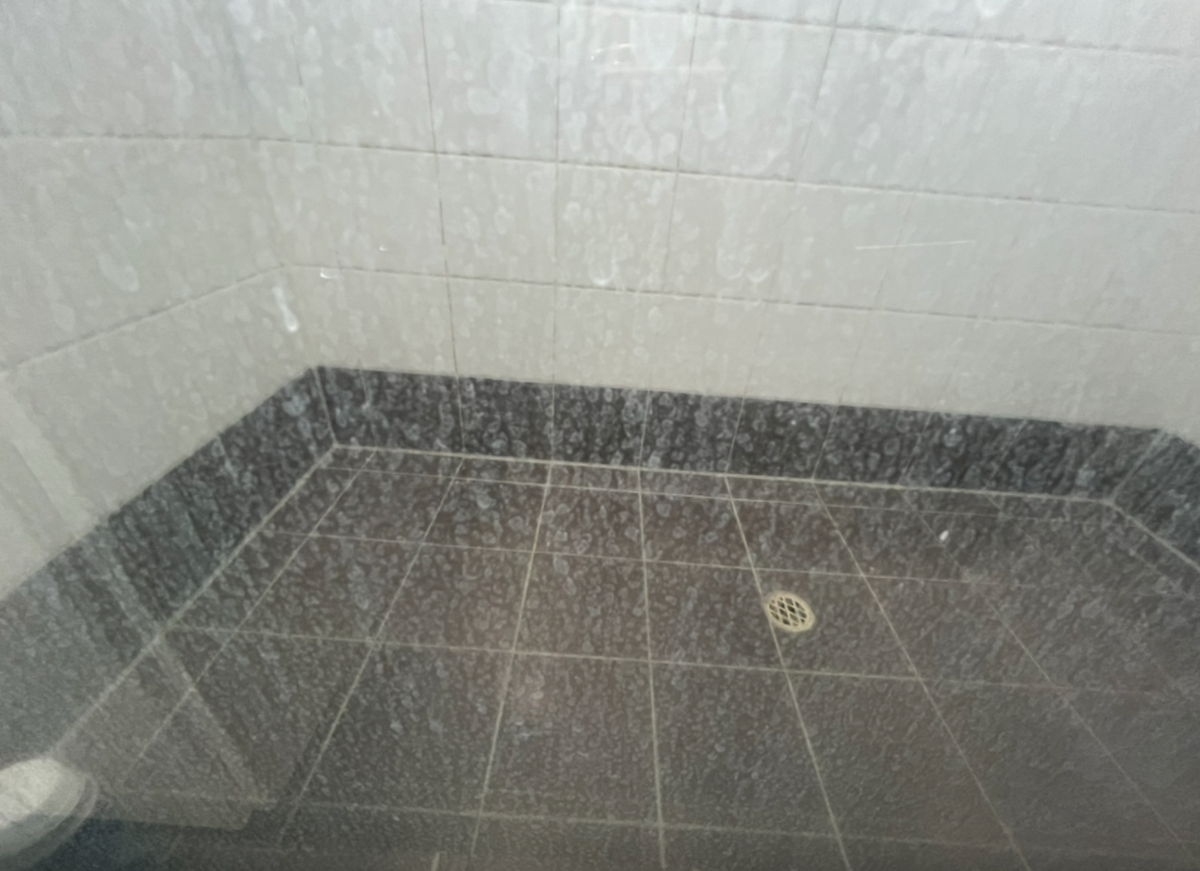
Your shower glass
You clean it.
It looks beautiful.
Then a few days later...
The white marks are back.
If you are constantly cleaning white marks from your shower glass, taps, showerheads, kettle or appliances, you may not have a cleaning problem. You may have a hard-water problem.
And if you live in a hard-water area, cleaning the scale away doesn't solve the problem. More hard water arrives every time you turn on the tap.
Before you start
A quick welcome, and what the Hard Water Education Centre is about.
START HERE
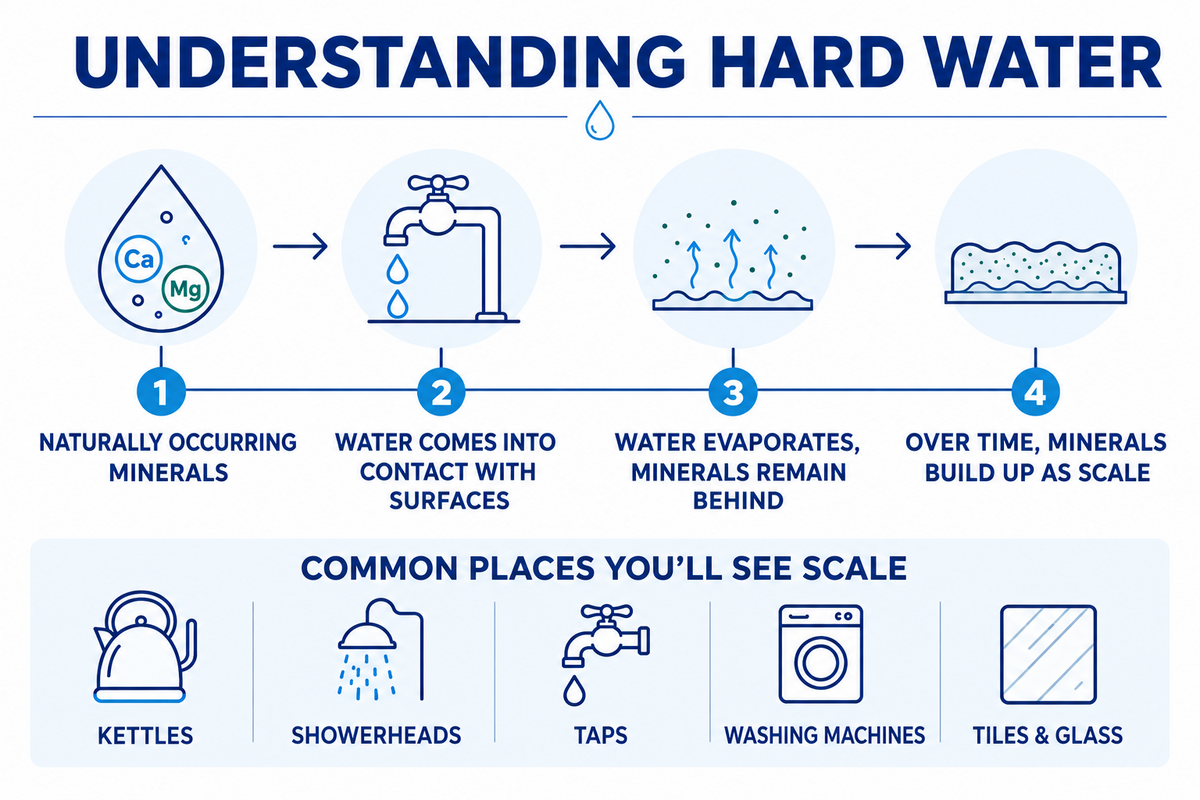
Hard water contains naturally occurring minerals, particularly calcium and magnesium. These minerals aren't necessarily something you want to remove simply because they are minerals. The problem is what can happen when hard water repeatedly comes into contact with surfaces throughout your home.
When water evaporates, minerals can remain behind. Over time, those deposits can build up as the familiar white scale many homeowners know only too well.
Signs of hard water
You clean it.
It looks beautiful.
Then a few days later...
The white marks are back.
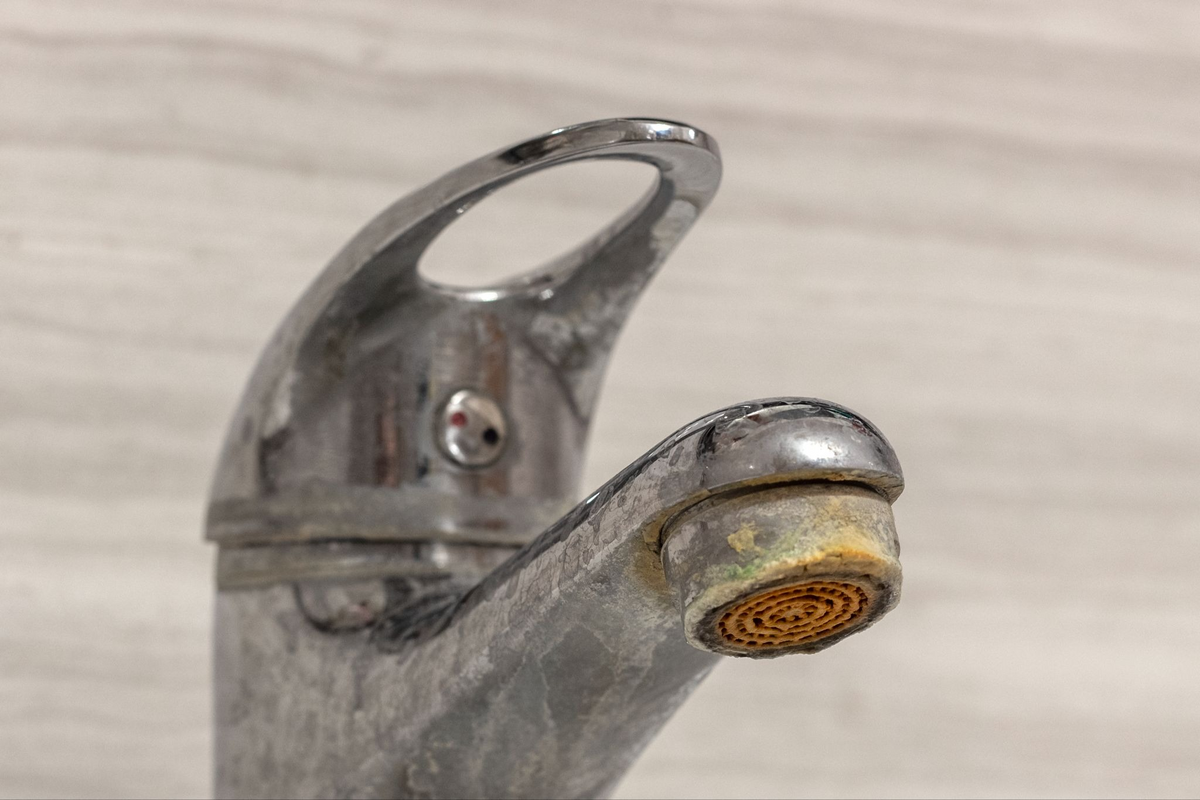
White deposits appear around the tap and fittings.
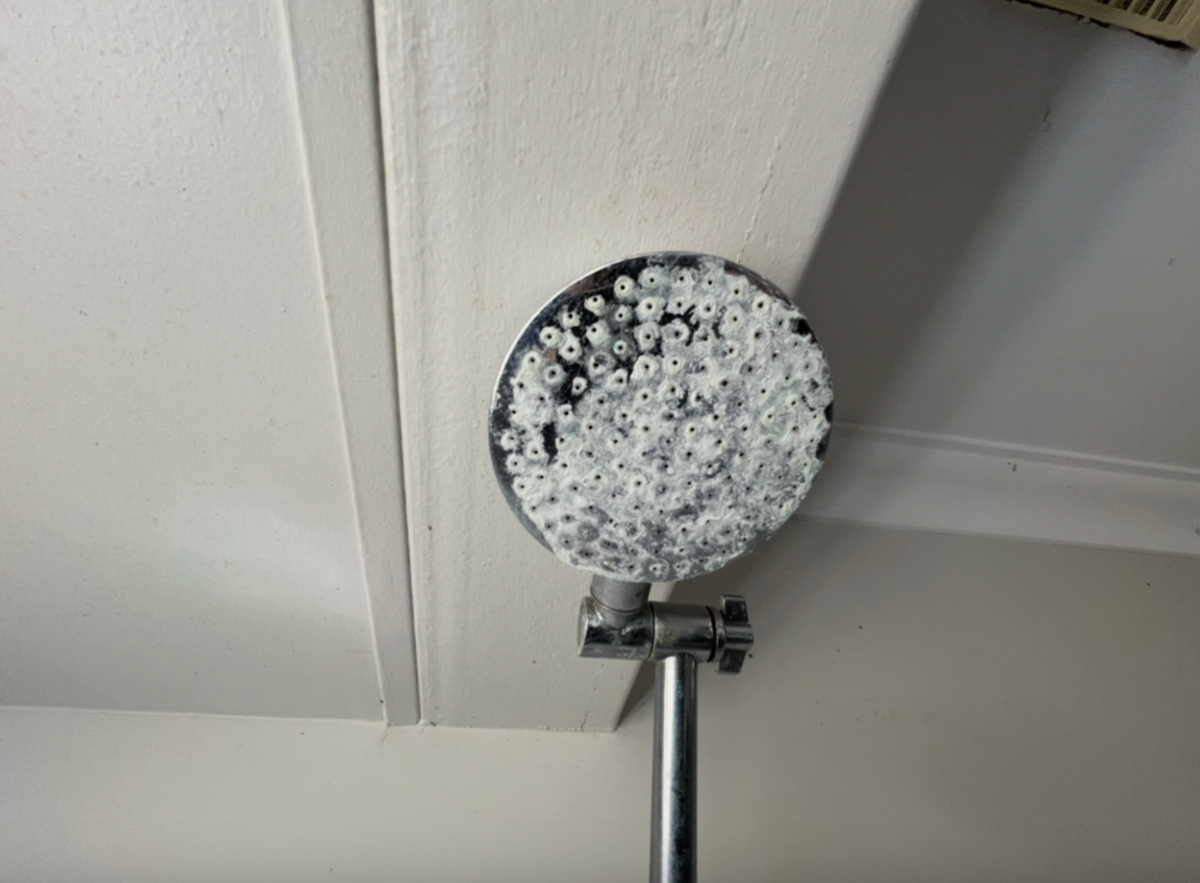
Scale begins building around the outlets.
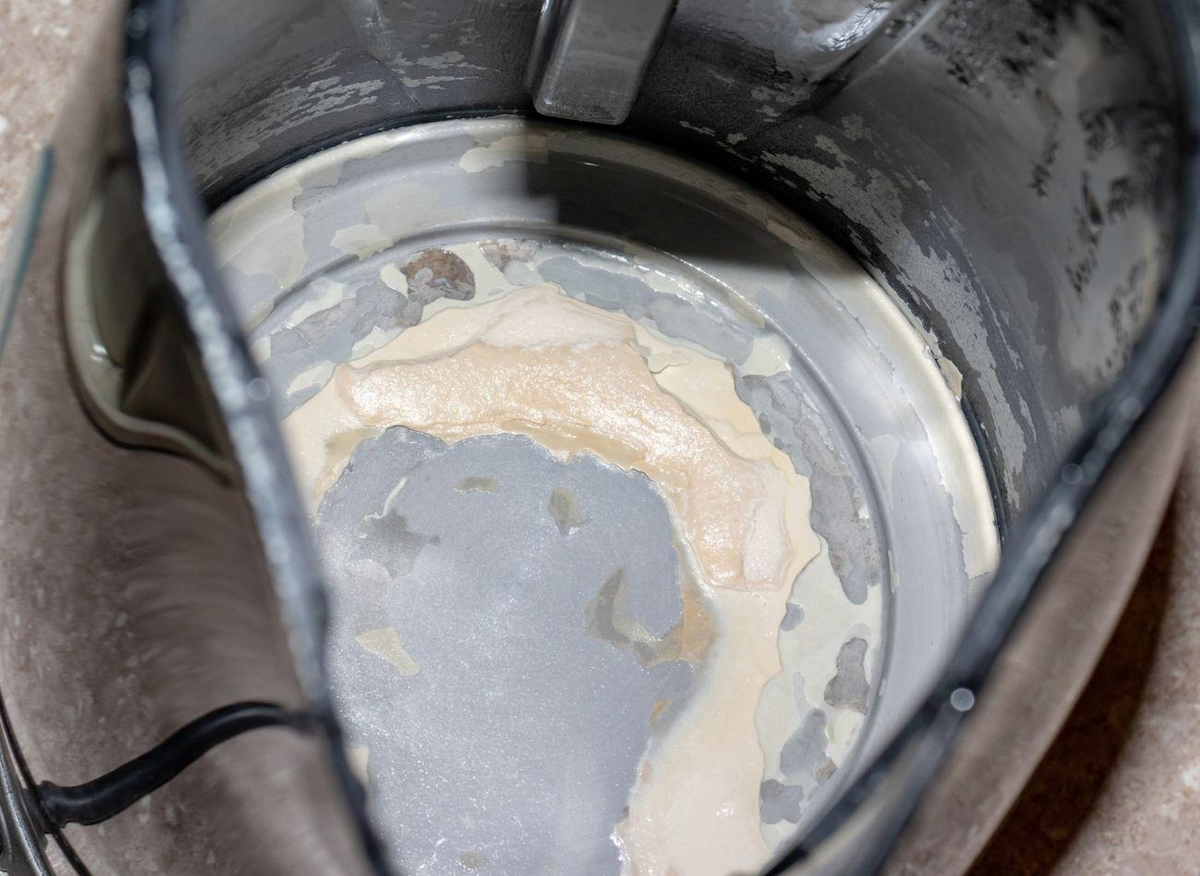
The heating element and inside surfaces become coated with mineral deposits.
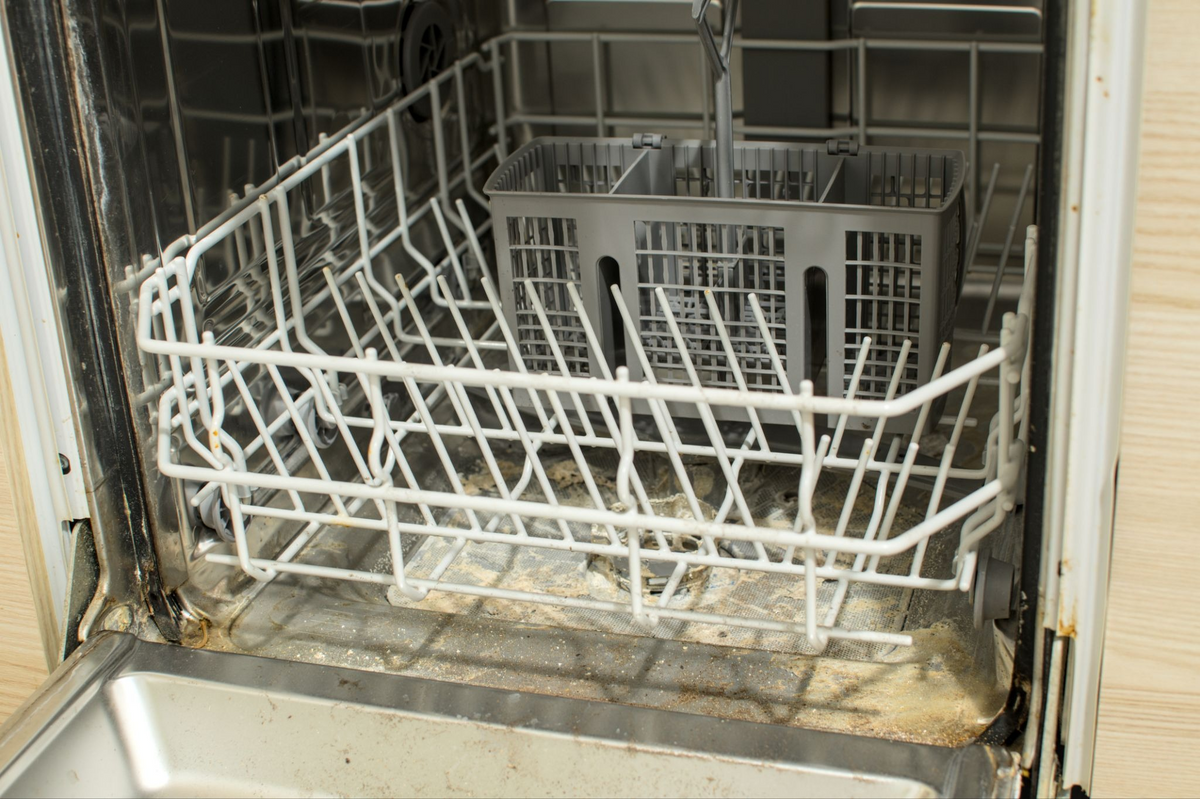
Mineral deposits can accumulate on surfaces and components.
And the frustrating thing is:
You keep cleaning the symptoms without ever changing the water causing them.
THE FULLER PICTURE
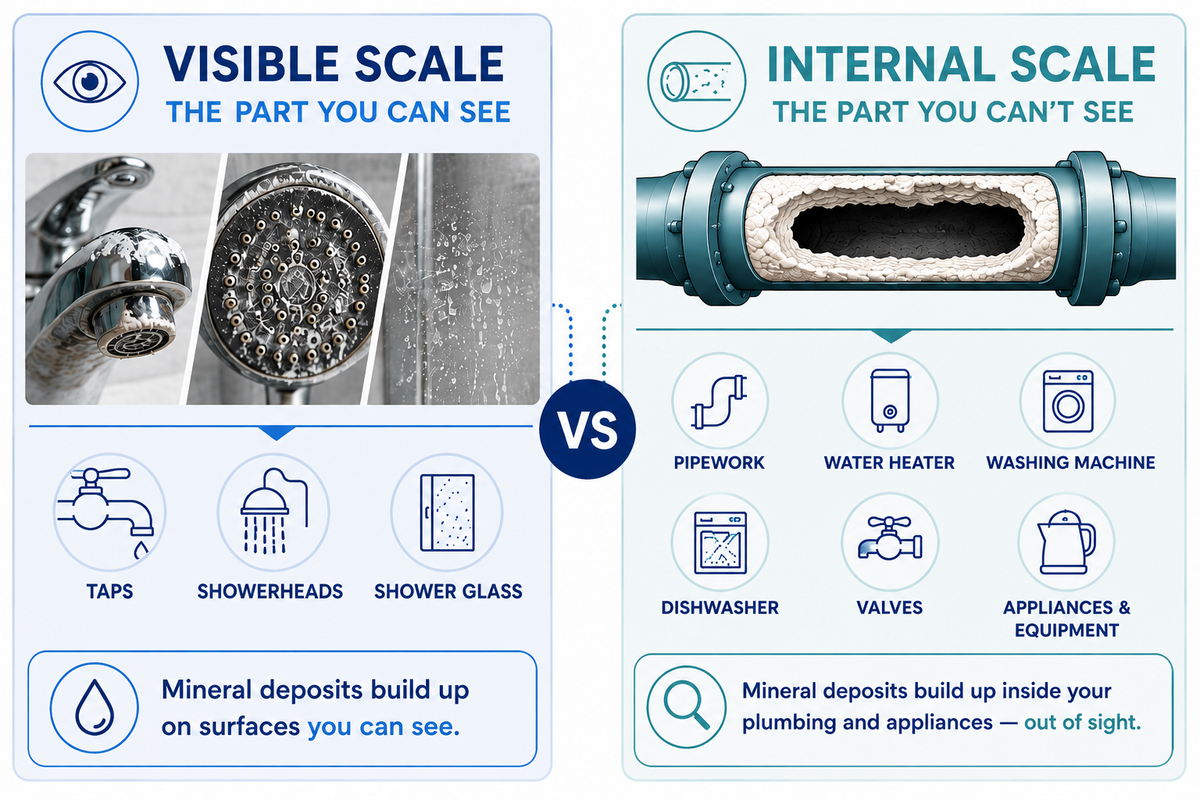
The white scale you can see on your shower glass, taps and showerhead is the part of the problem that is visible.
But water doesn't only come into contact with the things you can see.
Every day, hard water can travel through your home's plumbing and into appliances and equipment.
That means the same mineral-rich water can also pass through:
Where conditions are suitable, mineral deposits can accumulate internally as well as externally.
And unlike the scale on your shower glass, you can't simply see what's happening inside your plumbing and appliances.
Over time, mineral build-up can contribute to:
Hard water isn't simply an inconvenience because your bathroom looks dirty.
It can become an ongoing household maintenance problem.
And that's why we believe it is important to understand the problem before choosing a solution.
UNDERSTANDING THE IMPACT
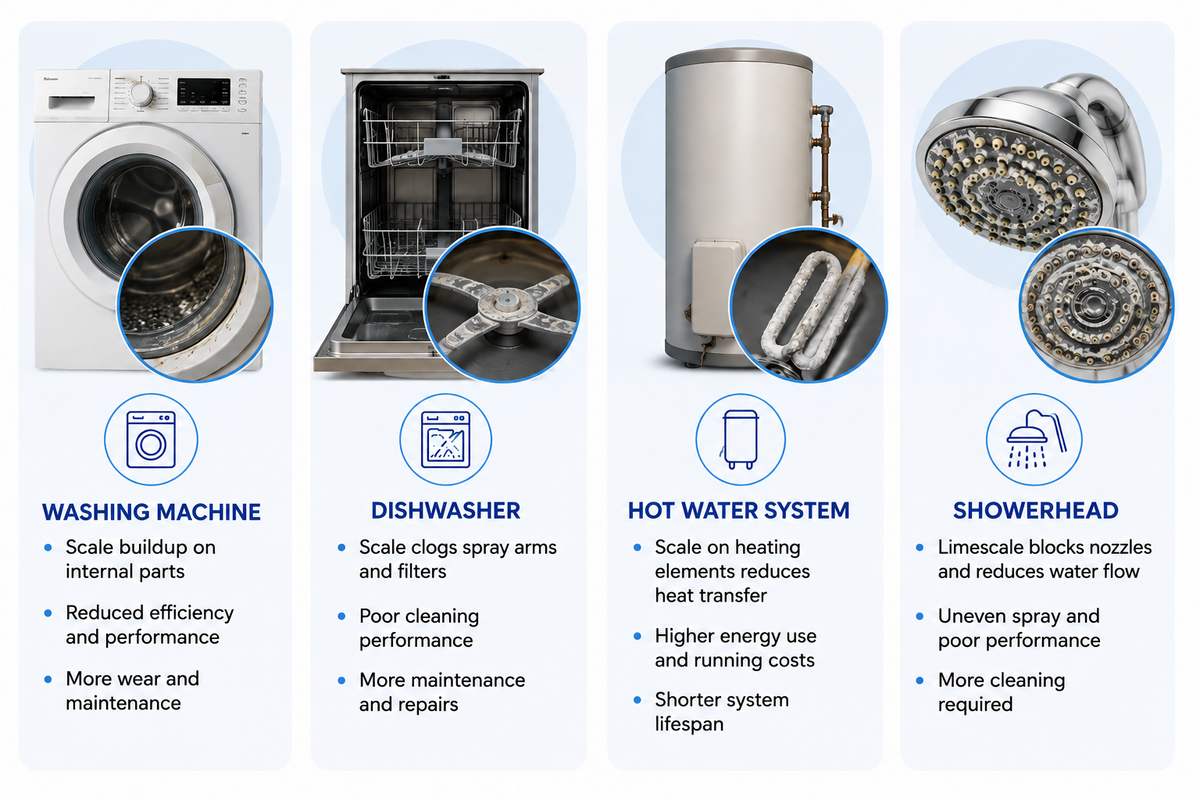
Hard water isn't just about having an ugly bathroom.
Scale can become a genuine household maintenance problem.
Mineral deposits can accumulate on:
And when scale builds up on heating elements, it can interfere with heat transfer.
Over time, this can contribute to reduced efficiency, increased energy use, reduced performance and component wear.
Hard water can therefore cost you more than simply the time spent cleaning.
It can mean:
The exact impact will depend on the hardness and chemistry of the water, the equipment involved and how it is used.
But if you can already see significant scale throughout your home, it is worth asking what is happening in the places you can't see.
UNDERSTANDING HARD WATER TREATMENT
BUT HERE'S WHERE IT GETS INTERESTING...
Usually, no.
This is one of the most important things we want Australian homeowners to understand.
Most conventional water filters are designed to reduce things such as:
But dissolved calcium and magnesium are different.
A normal sediment or carbon cartridge isn't designed to simply remove the hardness minerals from your water.
There are cartridges containing resins designed to exchange hardness ions, but using these to treat the water supply for an entire home creates other practical considerations, including cartridge capacity and replacement requirements.
So if someone tells you:
"Just put a normal water filter on it and your hard-water problem is solved."
Be careful.
Hard water is a different problem requiring a different solution.
WEIGHING YOUR OPTIONS
There are several technologies available.
Here's a quick explanation regarding the two most common hard water treatments on the Australian market today.
OPTION 1
Whole-house reverse osmosis

Reverse osmosis (RO) is one of the technologies capable of removing dissolved minerals such as calcium and magnesium from water.
For drinking water, RO can be an excellent solution.
But treating the water for an entire home is very different from treating the water from one drinking-water tap.
A whole-house RO system needs to produce and store enough treated water for showers, taps, washing machines, dishwashers and other household uses.
A whole-house RO installation can therefore involve:
Large RO equipment
Equipment capable of producing considerably more water than a normal drinking-water RO system.
Pre-filtration
Pre-treatment is generally required to protect RO membranes and maintain system performance.
Significant water-production capacity
The system needs to cope with household demand.
Filtered-water storage
Because RO production can be slower than the rate at which a household may suddenly require water, storage can be required.
Pumping & pressure management
Stored treated water may need to be pumped back into the home's plumbing system at usable pressure.
Wastewater management
Conventional RO systems reject some incoming water as part of the purification process, so whole-house systems need appropriate management of this water.
Additional water-quality considerations
Where large amounts of minerals and alkalinity are removed, water chemistry can change and may require consideration of pH and subsequent treatment.
Installation space
The equipment, storage and associated plumbing can require considerable space.
Ongoing maintenance
Pre-filters, membranes and other components require monitoring, servicing and replacement.
And there is another important question:
Do you actually need every drop of water in your home to have its calcium and magnesium removed?
For some homes and applications, the answer may be yes.
For others, whole-house RO may be considerably more treatment than is necessary to solve a scale problem.
If your objective is to physically remove hardness minerals from the water, whole-house RO is an option worth investigating.
OPTION 2
Water Softening

Water softening takes a different approach to removing hardness.
A conventional ion-exchange water softener exchanges calcium and magnesium for another ion, commonly sodium. This can be very effective at reducing traditional hard-water scale.
However, conventional softening also comes with considerations such as:
Salt
Salt needs to be purchased and regularly replenished.
Regeneration
The softener periodically needs to regenerate its ion-exchange media.
Regeneration water
Regeneration uses water, which needs an appropriate means of discharge.
Ongoing consumables
Salt and potentially other replacement components are ongoing costs.
Regular maintenance
The system needs to be maintained and kept operating correctly.
Installation space
The treatment tank, brine tank and associated plumbing require suitable space.
Drainage
Appropriate drainage is generally required for regeneration wastewater.
The water chemistry has also changed.
For some households, this is exactly what they want.
For others, they would prefer to retain the naturally occurring calcium and magnesium in their water and avoid the salt and regeneration process.
So again, the question is not simply:
"Which system removes the most minerals?"
Now you understand whole-house reverse osmosis and traditional softening.
Here's how Ultrapure makes its own lane, which might be perfect for you.
OPTION 3
ULTRAPURE HARD WATER PROTECTION

This is where ULTRAPURE takes a different path.

We don't remove the calcium and magnesium.
The minerals remain in the water.
Instead, ULTRAPURE is designed to condition the hardness minerals so they are less likely to form the stubborn, adherent scale that causes so many problems around the home.
In other words:
We're not trying to make the minerals disappear.
We're trying to change the way they behave.
OUR APPROACH TO BETTER WATER
WHAT FILTRATION DOES TO MINERALS

The simplest way we explain the concept is with an analogy.
Untreated mineral deposits can be thought of more like ice — hard, crystalline and prone to forming stubborn deposits.
After treatment, our objective is for the minerals to behave more like snow — remaining associated with the water and being less likely to form hard, adherent scale.
If water eventually evaporates and leaves minerals behind, our objective is for the resulting deposit to be less stubborn and easier to remove.
IMPORTANT
This is an analogy to help explain the concept. It is not a literal description of the minerals becoming snow.
The important point is: the minerals haven't disappeared. We are attempting to change their behaviour so they are less likely to form stubborn scale.
What we've seen in real homes

This is where we want ULTRAPURE to be different.
We're not asking you to simply believe our marketing.
We've been using and testing these systems in real homes for years.
As we collect better documented evidence, photographs, testing and customer results, we will continue adding that evidence here.

In one of our real-world observations, a kettle that was previously cleaned approximately every Friday reportedly only required cleaning approximately once a year after treatment.
This is a real-world observation, rather than a controlled laboratory study, and individual results may vary.

In many homes, shower glass has remained considerably cleaner.
However, in areas with particularly high calcium levels — including some northern Western Australian locations — mineral build-up can still occur on shower glass.
And if water is left to dry on the glass, deposits can still appear.
We don't want to hide that.
A squeegee can still be your friend.

Customers have reported cleaner appliances and less visible mineral build-up.

We also have a particularly interesting real-world example from a plumber who had a solar hot-water system operating for approximately 20 years — considerably longer than the service life he would normally expect.
That is an interesting observation.
But it is one real-world observation, not laboratory proof that the system will double the life of every hot-water system.
That's an important distinction.

This is important.
The ULTRAPURE Hard Water System:
And results can vary depending on:
COMPARE YOUR OPTIONS

“I want the hardness minerals removed from my water.”
“I want to reduce the problems caused by hard-water scale while retaining the calcium and magnesium.”
“I'm not sure which solution is right for my home.”
→ We can help you understand your water and find the right solution for your home.
Talk to our Sales Team on 02 5500 5310 or email sales@mywaterfilter.com.au to get in touch and explore your options before choosing a product.
FOR HOMES IN HARD WATER AREAS
If your main problem is hard-water scale,
CONSIDER THE ULTRAPURE HARD WATER SYSTEM.
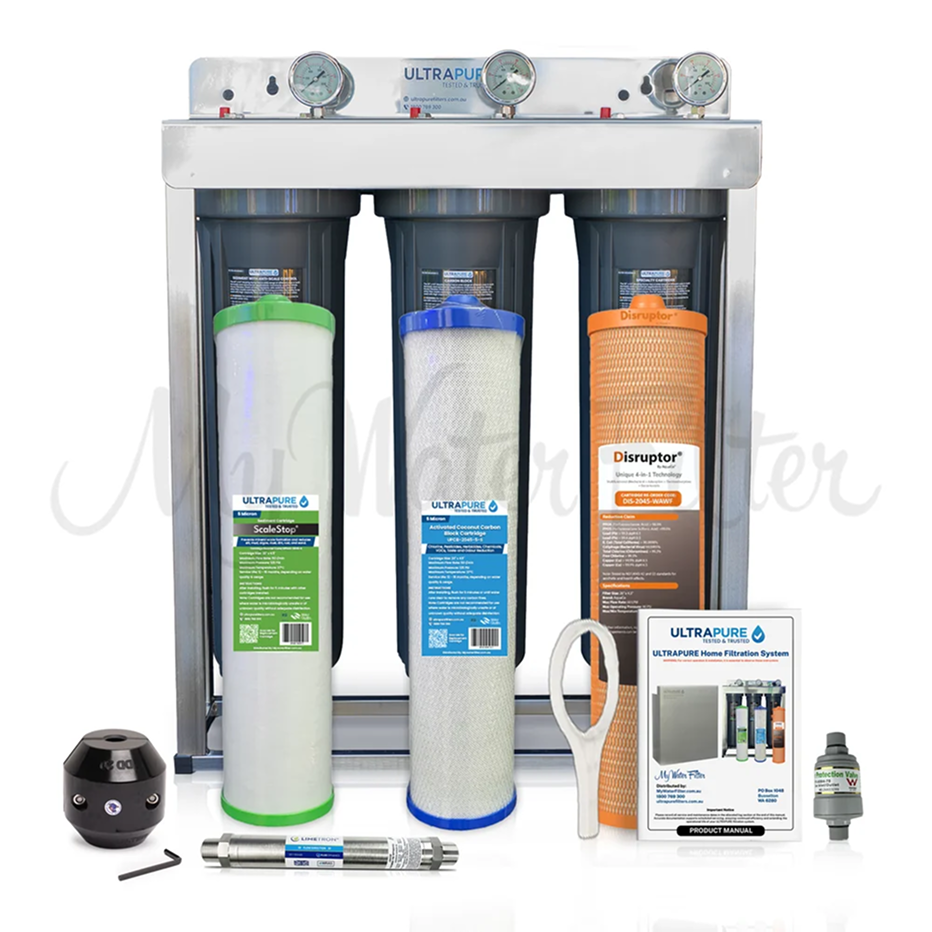
The complete system combines whole-house filtration with our hard-water treatment approach using:
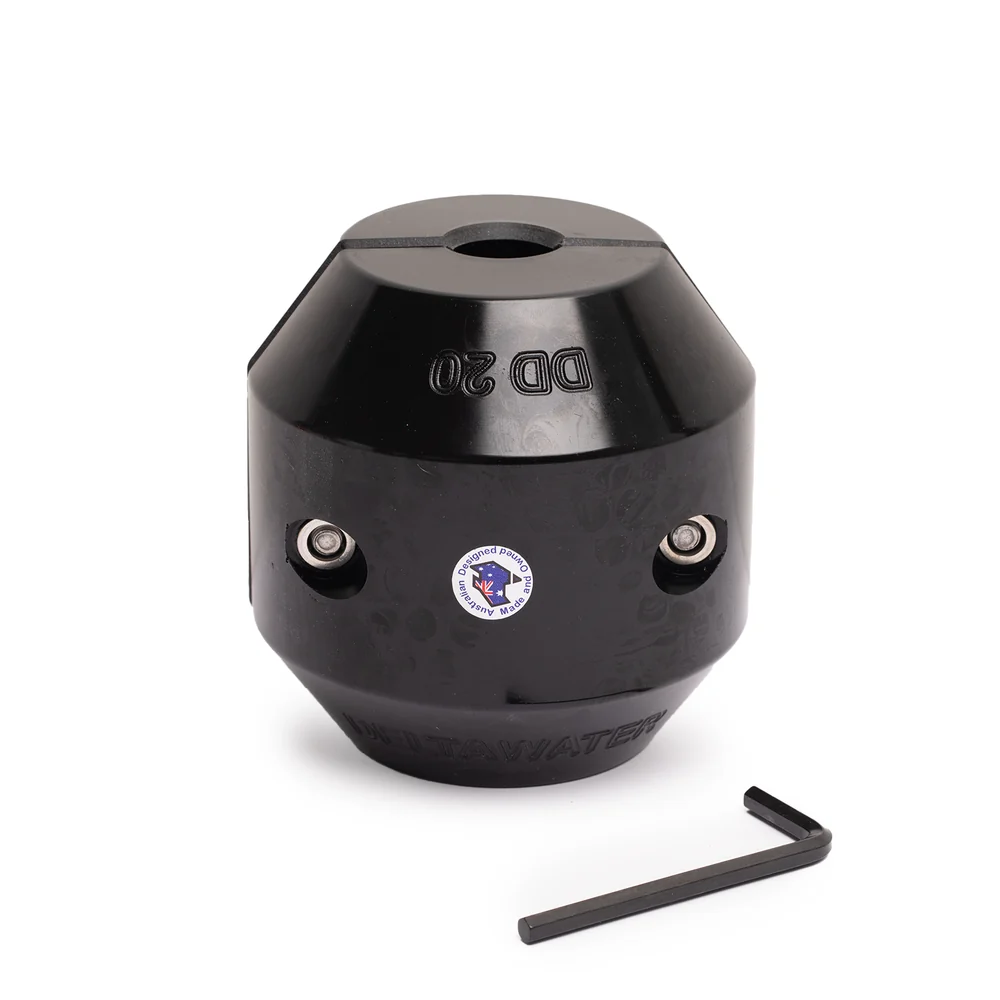
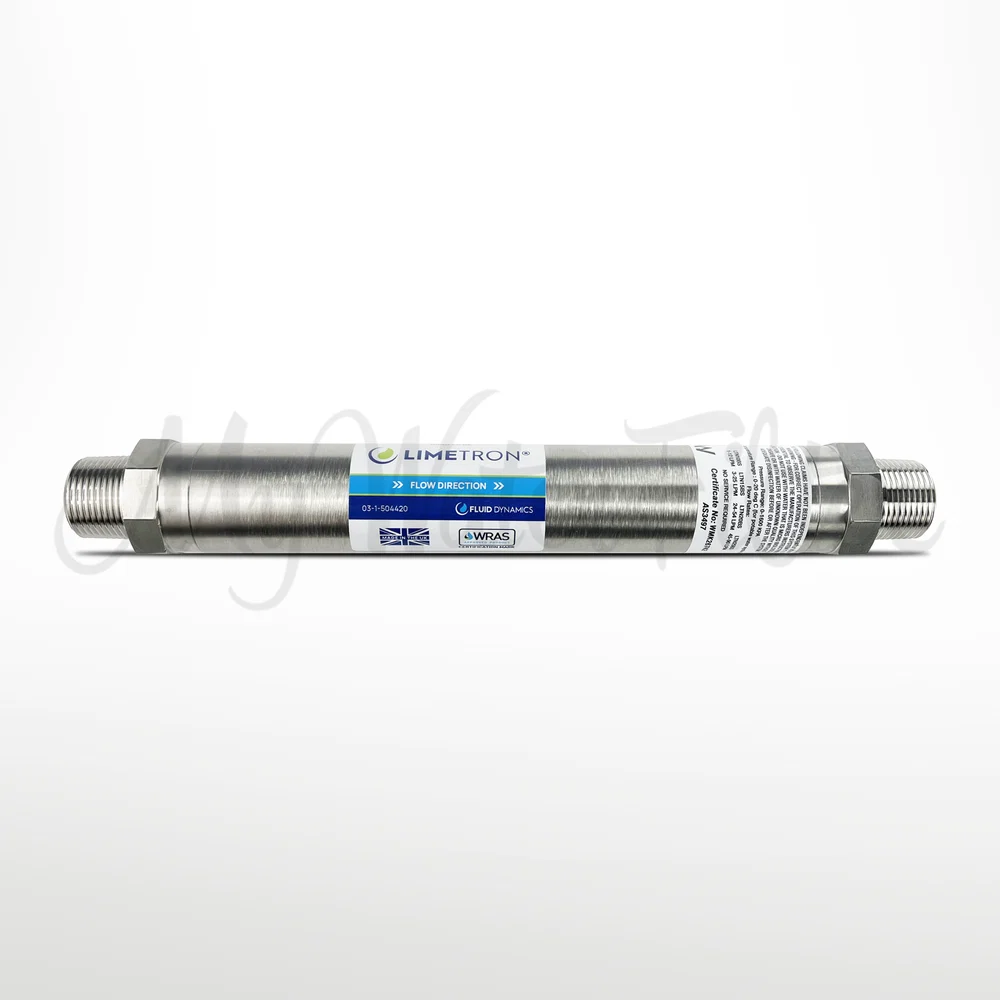
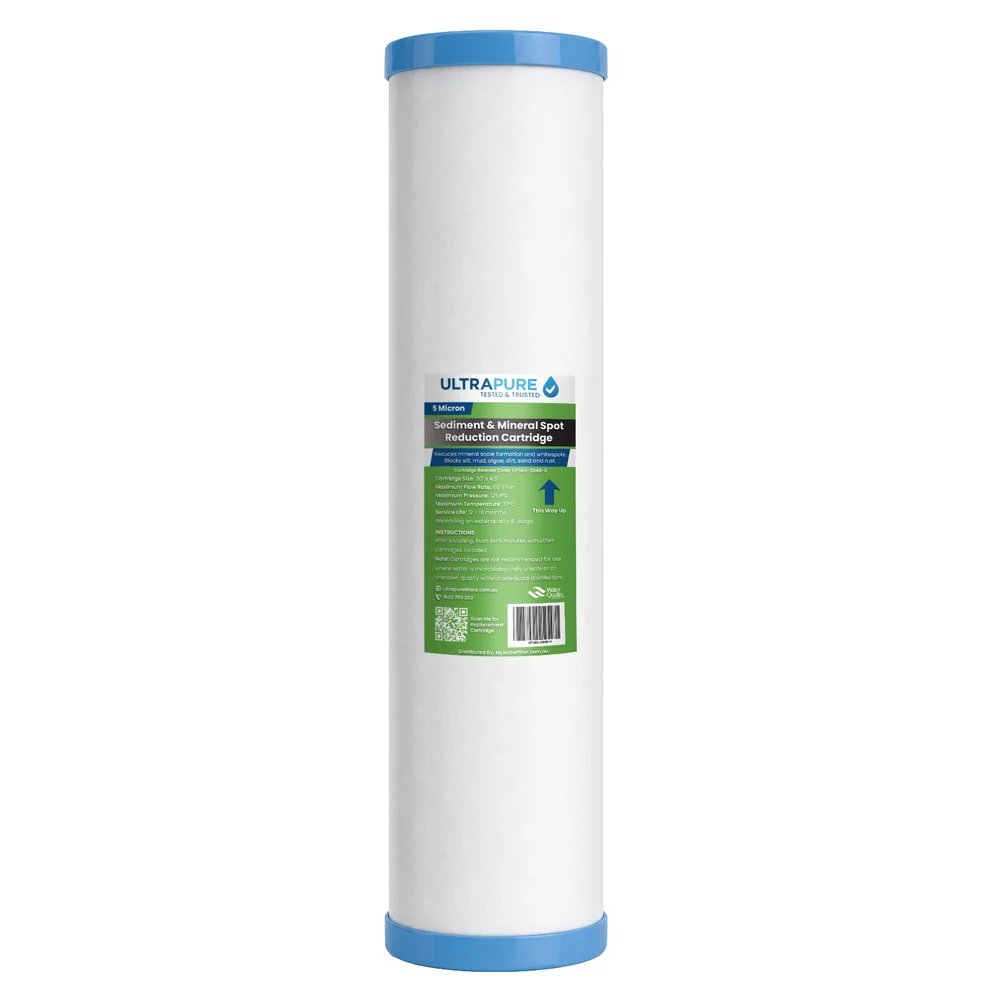
Together, these components are intended to provide whole-house hard-water protection without removing the calcium and magnesium.
COMPLETE HOME WATER SOLUTION


ULTRAPURE Hard Water System
$3,499.99
View the ULTRAPURE Hard Water System →Installation should be carried out by a licensed plumber.

ENHANCE YOUR FILTRATION
YOU MAY NOT NEED TO REPLACE IT.

If you already have a whole-house water filtration system, but still experience hard-water scale, we have developed a ULTRAPURE Hard Water Protection System that can be added to an existing whole-house filtration installation.
YOU MAY BE ABLE TO UPGRADE THE SYSTEM YOU ALREADY OWN.
Click here to see the Hard Water Protection System upgrade.
Find out if you can upgrade the system you already own by calling our Sales Team on 02 5500 5310 or visiting our Contact Us page.
GOT QUESTIONS?
Learn more about how ULTRAPURE Hard Water Protection shields your plumbing, fixtures, and family from mineral scale without using chemicals or salt.
No. The ULTRAPURE Hard Water Protection approach does not claim to remove calcium and magnesium from the water.
No system should make that promise. Results depend on water chemistry, hardness, temperature, usage and whether water is allowed to dry on surfaces.
No. A conventional ion-exchange softener reduces hardness by exchanging calcium and magnesium ions and replacing them with sodium. ULTRAPURE takes a different approach.
No. Reverse osmosis physically removes dissolved substances through a membrane. ULTRAPURE's hard-water approach does not claim to remove the hardness minerals.
Yes.
Shower glass will still gather soap scum and other residues, so it will still need regular cleaning - regardless of which water treatment system you use.
In hard-water areas, if water is allowed to dry on the glass, minerals can still be left behind. However, when the hardness minerals have been conditioned, we have found through years of testing and real-world use that these mineral deposits are much easier to wipe away.
This does not mean your shower glass will never need cleaning.
The objective is to reduce stubborn hard-water scale and make keeping your shower glass clean much easier - not to promise a maintenance-free bathroom.
We believe customers deserve the truth first, and fresh filtered water second.
We don't believe the answer is always the most expensive filter.
We don't believe every home needs the same system.
And we don't believe you should have to understand water-treatment technology before you can make a good decision.
That's our job.

The trusted source for understanding water and water problems.